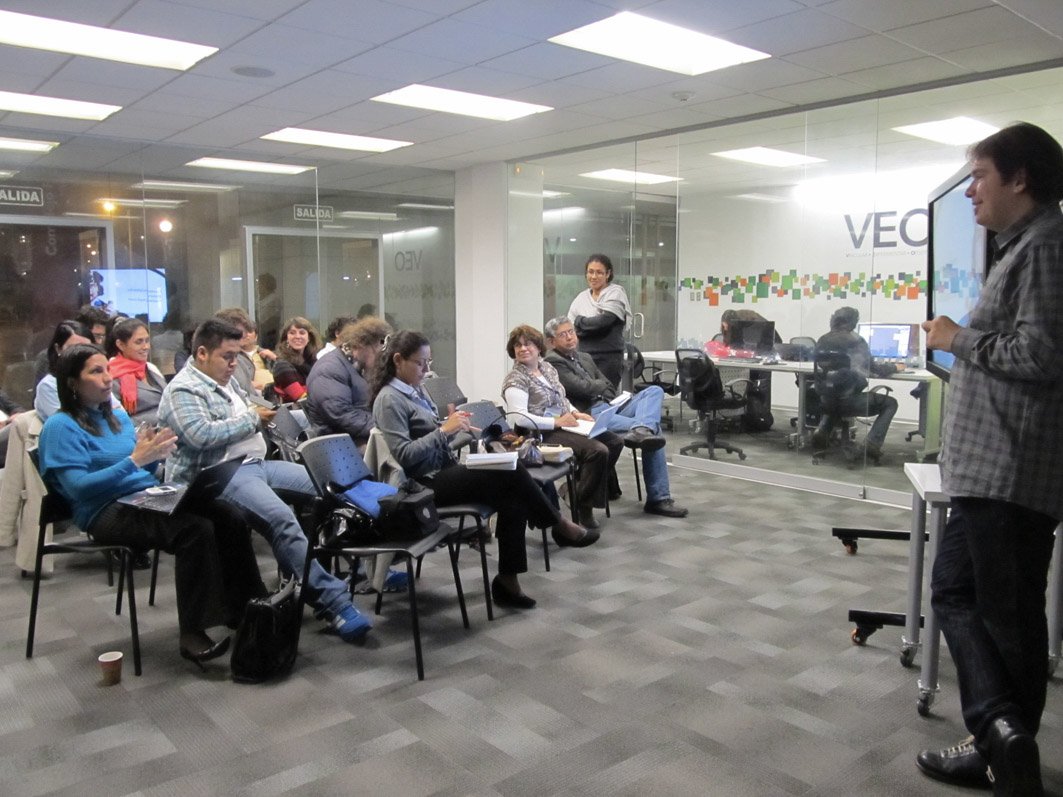
Corporate storytelling training earns its budget when it changes what people do on Monday morning. Yamaha ran 24 training cohorts of the Palacios Method over 8 years, from 2016 to 2024, until the method became the company's official standard.
Fernando Palacios founded Storytellers in 2006, the first storytelling company in Brazil, and the practice has trained more than 30,000 professionals since. Across 20 years the same pattern repeats inside large companies: teams that can build a financial model in an afternoon will spend three weeks on a deck that nobody can repeat the next day.
The Problem: Skill That Evaporates in Two Weeks
Most companies buy corporate storytelling training as an event. A room, a speaker, an energized afternoon, a photo for the intranet. Two weeks later the slides look exactly as they did before, because the training handed people vocabulary and left their working process untouched.
The cost shows up quietly. Deals slow down because the proposal reads like a catalog. Change programs stall because the announcement explained the mechanics and skipped the reason. Good internal work goes unnoticed because it arrives inside a bad presentation. Each of those is a communication failure filed under a different heading, and each gets charged to a different budget line, which is why the pattern survives so long.
Why the Usual Corporate Storytelling Course Fails
There are three reasons, in order of damage.
First, the standard course teaches structure borrowed from screenwriting and stops there. A team learns the hero's journey, then walks back into a quarterly business review where the hero's journey has nowhere to sit. The framework was real, and the transfer to the actual artifact was missing.
Second, most programs train individuals and ignore the system around them. One person returns fluent, the surrounding thirty keep the old template, and the fluent one gets edited back into the average within a month.
Third, the training rarely touches the artifacts themselves. People leave with a notebook full of principles while the deck template, the proposal boilerplate and the town hall agenda stay exactly where they were. Behavior follows artifacts. Change the artifact and the behavior follows on its own.
How the Palacios Method Solves It
The Palacios Method is built on Narrative Intelligence and Strategic Entertainment, with the 8 Steps as its working engine, refined across 20 years of real rooms and real audiences. It treats a business narrative as architecture: a structure with load-bearing parts that can be inspected, tested and repaired by someone who has never written a line of fiction.
The 8 Steps give a team a shared sequence, which means two colleagues can disagree about a deck using the same vocabulary. Strategic Entertainment answers the harder question of why anyone should still be listening at minute four, using tension, character and stakes drawn from the business itself.
Training built on this stack moves three things at once: the language people use to critique each other's work, the templates they start from, and the review ritual that decides what ships. That combination is what makes the skill outlive the workshop. The full architecture sits in the method.
The Yamaha Case: 24 Cohorts Over 8 Years
Yamaha adopted the method. The program ran 24 training cohorts over 8 years, from 2016 to 2024, and the method became the company's official standard.
The number that matters there is 24. A company repeats a training program two dozen times when the previous cohort produced something visible. Each new group arrived to find colleagues already working with the same structure, which dissolved the isolation problem: the returning participant met a system that already spoke the language.
The same architecture has trained more than 30,000 professionals, and Fernando Palacios was named World's Best Storyteller at the World HRD Congress in Mumbai, in 2017 and 2018, the only Brazilian to receive the award. More examples sit in cases.
How to Run Training That Sticks: Five Steps
1. Start from a live piece of work. Choose a real deck, proposal or town hall already scheduled inside the next 30 days. Abstract exercises produce abstract skill, and abstract skill has no deadline to prove itself against.
2. Train the smallest complete unit. A whole team, including the person who approves the final version. Training a contributor while leaving the approver untrained guarantees regression at the last edit.
3. Rebuild the templates inside the room. Leave the workshop with the new deck skeleton, the new proposal opening and the new agenda already saved to the shared drive, named and dated.
4. Install one review ritual. Fifteen minutes before anything important ships, one colleague reads it against the 8 Steps and says where the argument loses its footing. This costs almost nothing and catches most of the damage.
5. Measure a business number. Deal cycle length, meeting follow-through, adoption rate of the change you announced. Reaction sheets measure the afternoon, and the afternoon was never the point. The reasoning is laid out in storytelling ROI.
Frequently Asked Questions
How Long Does Corporate Storytelling Training Take?
A working team reaches usable fluency in two sessions plus one live piece of work. Fluency across a whole organization takes cohorts over time, which is the shape the Yamaha program took across 8 years.
Does It Work for Technical Teams?
Engineers and analysts tend to move fastest, because the method is structural. Once a data lead sees narrative as architecture with load-bearing parts, the resistance disappears. The specifics live in data storytelling.
Should Leaders and Individual Contributors Train Together?
Mixing them is usually better. Leaders learn what to ask for, contributors learn what to deliver, and the translation gap between the two closes in the same room. See leadership storytelling.
Your Next Step
Bring one live piece of work and one team that shares a deadline. That is enough to run a first cohort and produce something the organization can see. If the goal is a company-wide shift, the same structure carries into storytelling for change management.
To design a program for your teams, explore the services or get in touch with Fernando Palacios.
A calibrated method built from 20 years of real rooms, real audiences, and real results. The Palacios Method stack ensures the narrative lands. Not vibe typing. VibeStorytelling.
Next Step
Bring the Palacios Method to your team
The AI is not the author. The AI is the pen. Fernando Palacios is the author. Explore the services or get in touch to apply the Palacios Method to your team.