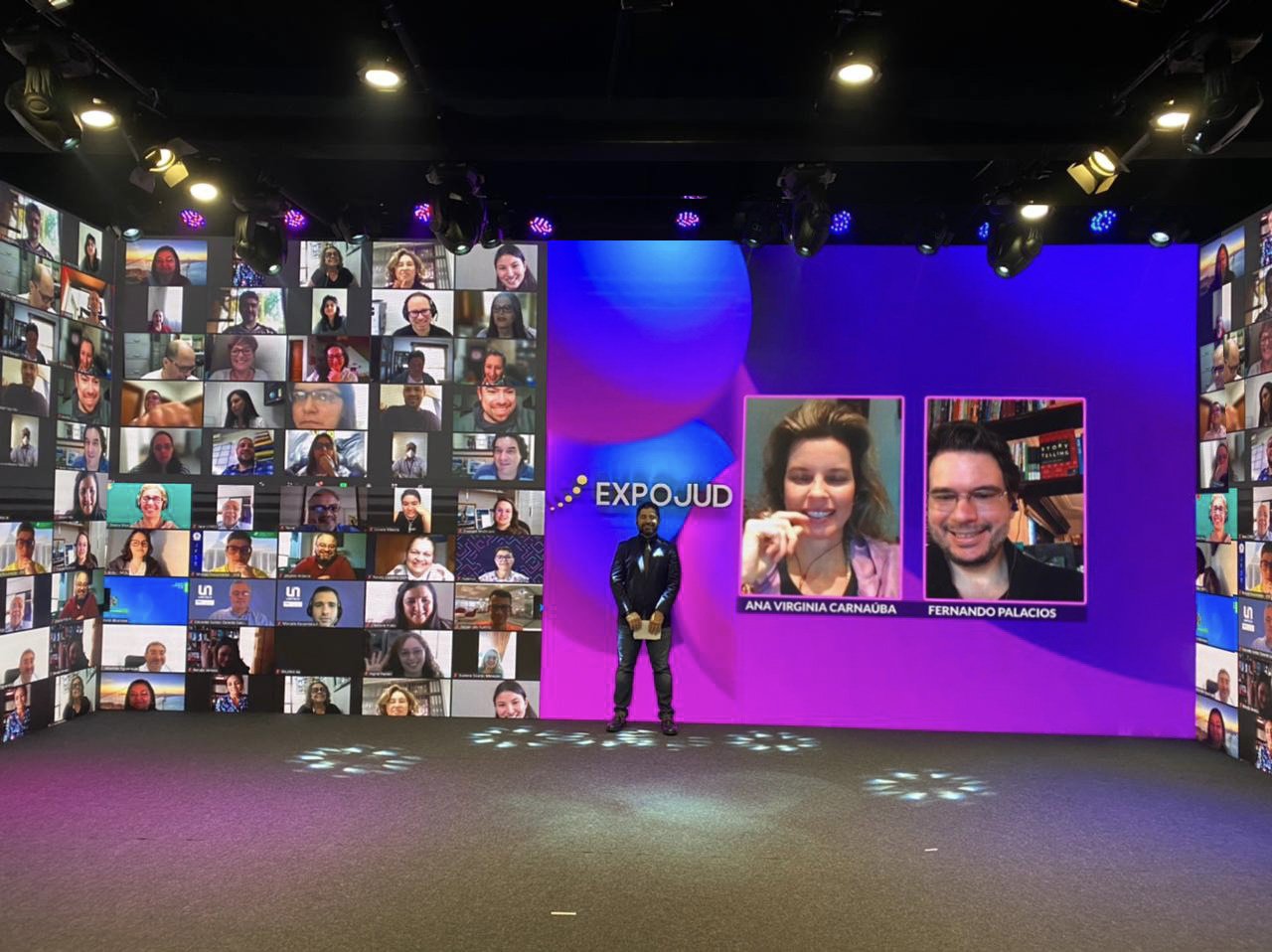
Stage presence reads as a personal gift and behaves like an engineering problem. Voice, body and pause are governed by the structure of the argument underneath them, which is why the durable fix starts on paper.
Fernando Palacios founded Storytellers in 2006, the first storytelling company in Brazil, and 20 years of stages have made the pattern hard to miss. The executives who command a room are the ones who know exactly what their next sentence is for.
Why Delivery Coaching Alone Wears Off
Delivery coaching hands an executive a set of instructions to run while speaking: slow down, open the chest, hold the pause, vary the pitch. Every instruction consumes attention, and attention during a talk is the scarcest resource in the room.
Under pressure the instructions get dropped in the order they were learned, which is why the effect of a delivery workshop tends to last about as long as the memory of it.
The deeper issue is that most delivery problems are structural symptoms. Speed comes from uncertainty about how long the argument is. A weak pause comes from having no sense of what the next beat is worth. A closed body comes from a speaker who has yet to decide what they are asking the room to do.
The Direct Answer: Structure First, Then Voice
A speaker who knows the shape of their argument gets most of the delivery for free. Pace follows the beats. Pauses land where the argument turns. Volume rises where the stake rises, because the speaker can feel the stake arriving before the sentence does.
Voice work then has something to attach to. Breath, projection and articulation are trainable, and they compound once a speaker has a structure telling them where to spend the effort.
Presence, in the end, is the audience's read on whether you know where you are going. Give them that evidence in the first minute and they hand over the rest of the hour.
The ABF Convention, 2017
In 2017 the ABF, the Brazilian Franchising Association, brought a storytelling talk built on the 8 Steps of Palacios to its 30th anniversary convention. The staging carried 6 costume changes on stage and projections, all of it hung on that structure.
Production at that level holds together when the argument underneath is settled, because every change on stage has to mark a movement the audience can follow. The lesson scales down to one executive with no production budget: the structure that lets a convention change costumes is the same structure that lets a single speaker change tone and take the room along.
How the Palacios Method Trains Voice and Presence
The Palacios Method runs on Narrative Intelligence and Strategic Entertainment, with the 8 Steps as its working engine. The 8 Steps give a talk a spine the speaker can feel in real time: what the protagonist wants, what stands in the way, what changes, what it costs, what happens next. A speaker who can feel which step they are standing on always knows what the current sentence is for, and that knowledge is what steadies the voice.
Strategic Entertainment handles tension, character and stakes, which are the three things that move a body on a stage. Tension slows a speaker down on purpose. Character gives them somebody to be specific about. Stakes give the volume somewhere to go. The full architecture sits in the method.
The argument-level craft that sits above delivery is covered in executive speaking skills.
Building Presence
1. Mark the beats on the page. Draw a line at every point where the argument turns. Those lines are your pauses, and they get decided in advance.
2. Rehearse standing, out loud, at full volume. The room hears the voice, and a voice only gets rehearsed by being used at the volume it will need.
3. Fix the opening sixty seconds word for word. The start is where adrenaline peaks and improvisation costs the most. A memorized opening buys the speaker a full minute to settle into the body.
4. Give the body a job at each beat. A move across the stage on a turn, stillness during a stake, a step toward the audience on the ask. Blocking placed by the argument looks natural.
5. Record one rehearsal and watch it twice. Watch once with the sound off to see the body, then listen once with the screen covered to hear the pace.
Frequently Asked Questions
Can Stage Presence Be Trained?
Yes, and the fastest gains come from the structural side. A speaker who reorganizes the argument usually sounds different within a week, because the pauses and the pace start being produced by the material itself. Breath and projection then respond to ordinary practice.
What Should I Do With My Hands?
Give them something to mark. Hands look awkward when they have no relationship to the argument, and they look purposeful the moment they are marking a count, a contrast or a size. Assign one gesture per beat during rehearsal and the question dissolves on stage.
Your Next Step
Take your next talk, print the script, and draw a line at every turn in the argument. Rehearse it standing and out loud, once with the lines visible and once from memory, and watch how much delivery advice arrives on its own. The nerves sitting underneath all of this are handled in presentation anxiety and delivery, and pace in particular is covered in speaking too fast when presenting.
To train voice and presence with the method, explore the services or get in touch with Fernando Palacios.
A calibrated method built from 20 years of real rooms, real audiences, and real results. The Palacios Method stack ensures the narrative lands. Not vibe typing. VibeStorytelling.
Next Step
Bring the Palacios Method to your team
The AI is not the author. The AI is the pen. Fernando Palacios is the author. Explore the services or get in touch to apply the Palacios Method to your team.