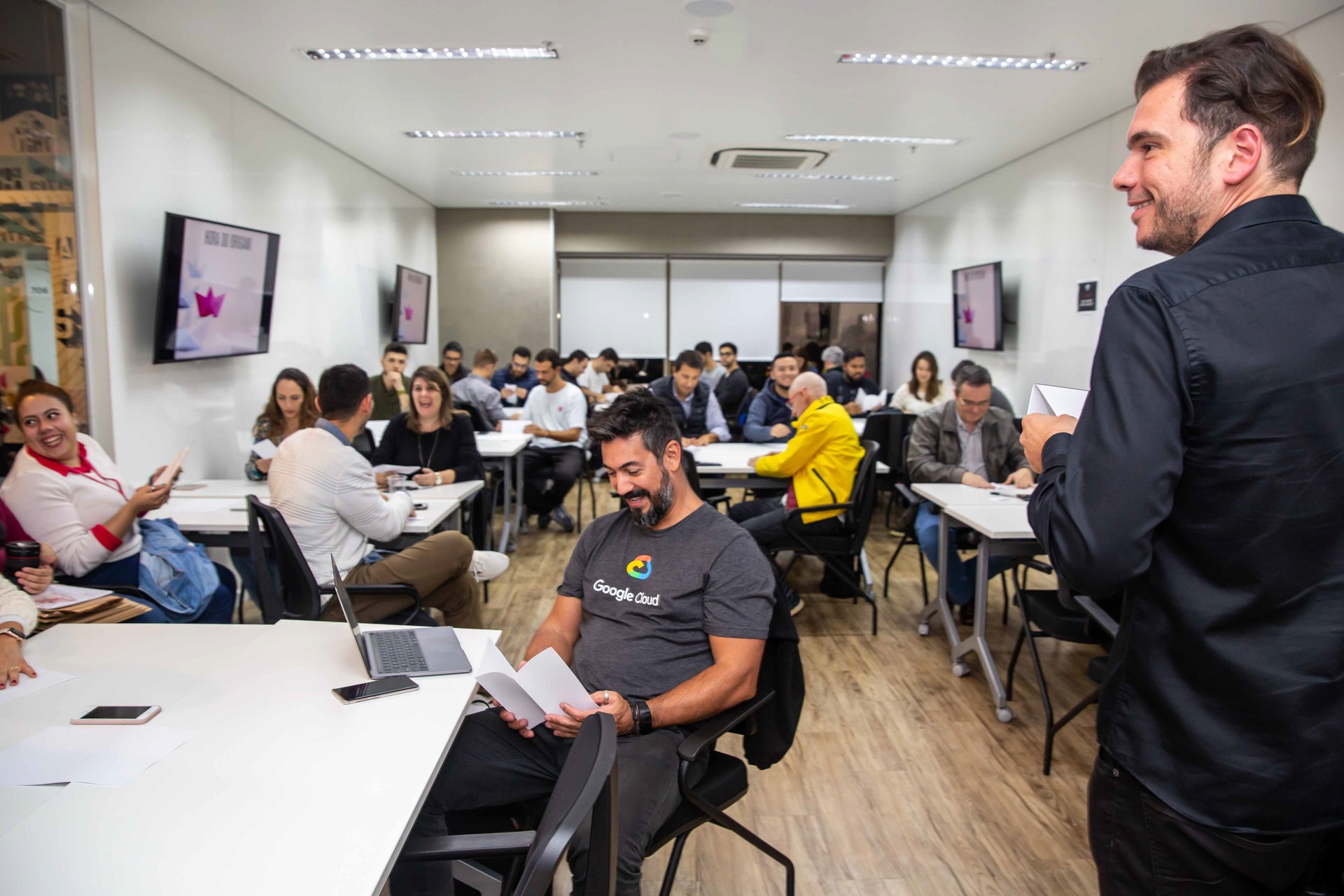
A corporate presentation becomes engaging when the audience can tell what is at stake for them by the second slide. In 2008 Fernando Palacios turned 1,248 slides from the Dona Benta brand at J. Macêdo into a single theatrical narrative.
Engagement in a corporate room is a structural property. Charisma helps a presenter hold a room that is already interested. Structure is what makes a room interested in the first place, and structure is the part that can be built in advance and repeated by somebody else.
Why Corporate Presentations Lose the Room
The standard corporate deck is organized the way the work was done: context, method, findings, options, recommendation. That order is honest, and it runs backwards for a listener who spends the first half of the meeting waiting to learn why any of it matters.
Two things follow. Attention drops, because a status update puts nothing at stake. And the questions arrive out of sequence, because somebody in the room gets impatient and asks early what was planned for the end.
The usual response makes it worse. Teams add animation, add photography, add a joke at the opening. Decoration on a flat argument produces a well-dressed flat argument.
The Direct Answer
Give the presentation a protagonist, a stake and a consequence, then put the ask where the audience can act on it.
A protagonist is whoever the outcome happens to: a customer, a team, a region, a shift. A stake is what that protagonist stands to lose or gain. A consequence is what changes on Monday depending on the decision taken in this room.
A deck carrying those three elements holds attention with no new visual assets at all, because the audience now has a reason to want the next slide. Where the ask sits in the running order, and what the evidence has to do after it, is the separate job covered in how to structure a business presentation. This page stays on the mechanics that make a room want the next slide.
How the Palacios Method Does It
The Palacios Method runs on Narrative Intelligence and Strategic Entertainment, with the 8 Steps as its working engine. The 8 Steps give a presentation a load-bearing sequence: what the audience wants, what stands in the way, what changes, what it costs, what happens next. Strategic Entertainment answers why anyone should still be listening once the first chart is on screen, using tension and stakes drawn from the business itself. The full architecture sits in the method.
The extreme demonstration is the Dona Benta rebuild. In 2008 the J. Macêdo portfolio had to be presented, and the material ran to 1,248 slides. The rebuild converted that volume into a theatrical narrative: brands became characters with wants and obstacles, category data became the terrain those characters moved through, and the strategy became the resolution.
An audience that would have skimmed the document watched a story it could retell afterward. Retellability is the honest measure of an engaging corporate presentation, because a recommendation survives when the people in the room can repeat it accurately to the people who were absent. More examples sit in cases.
Five Steps to Make the Next One Engaging
1. Name the protagonist in one sentence. Write who this decision happens to and what they want. When that sentence resists being written, the deck was going to wander.
2. Attach a stake to that protagonist. Write what this group loses if the room does nothing and what they gain if it moves. A stake is what turns a status update into a reason to keep watching.
3. Give every chart a verdict as its title. The title states the conclusion the chart proves. A reader who sees only titles should still finish with your argument intact. The mechanics are covered in data storytelling.
4. Stage the objections as characters. What it costs, what it risks and when it lands walk into every corporate room. Give each one a slide with a headline in the objector's own words, answered underneath.
5. End with the first week. Named owners, specific dates, and a calendar invite that exists before the meeting ends. A recommendation with no first week is a discussion topic.
Frequently Asked Questions
Do We Need Better Slide Design?
Design earns its keep on a structure that already works. On a broken argument it buys about ninety seconds of goodwill before the confusion returns, which is why a redesign so often leaves the same meeting outcome behind.
How Do We Engage a Room When the Content Is Dry?
Dry usually means the consequence was left out. Attach every finding to what it costs or unlocks for a named group, and the material stops being neutral. A board or an executive committee needs the same repair, applied to a shorter clock.
Your Next Step
Take the deck you are presenting next and rewrite two things: the second slide and every chart title. Those two edits change how a room behaves before you touch anything else. The full rebuild sequence is in storytelling for executive presentations.
To rebuild a presentation with the method, explore the services or get in touch with Fernando Palacios.
A calibrated method built from 20 years of real rooms, real audiences, and real results. The Palacios Method stack ensures the narrative lands. Not vibe typing. VibeStorytelling.
Next Step
Bring the Palacios Method to your team
The AI is not the author. The AI is the pen. Fernando Palacios is the author. Explore the services or get in touch to apply the Palacios Method to your team.