Engagement shows up in what people repeat to each other when no executive is in the room. A survey score records mood on the day it was collected, and the sentence a team retells shows what the company actually installed.
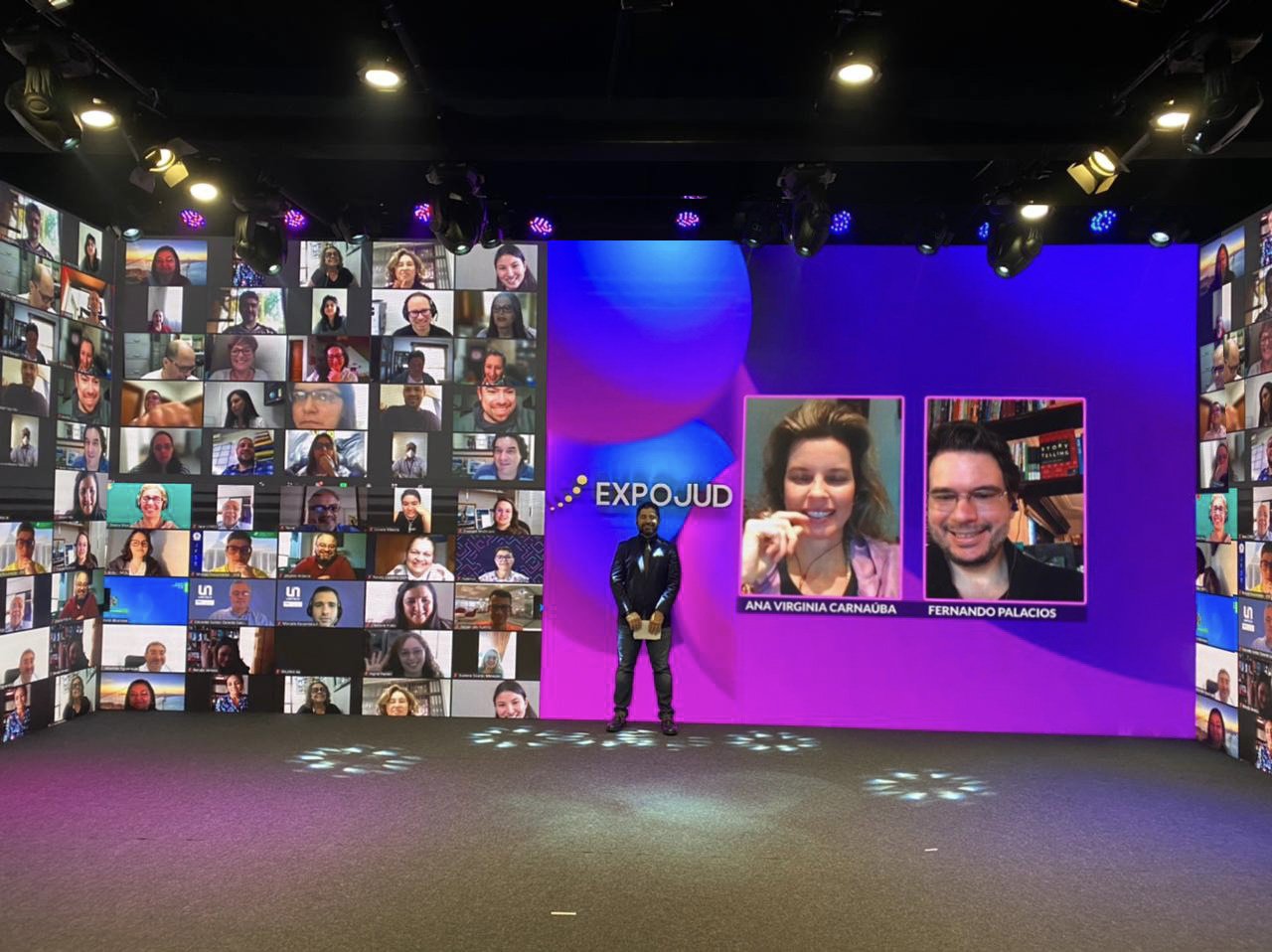
Fernando Palacios founded Storytellers in 2006, the first storytelling company in Brazil. At Yamaha the Palacios Method ran across 24 cohorts over 8 years, from 2016 to 2024, and became the company's official standard, which is a decision a company makes after watching what the training changed in the work.
Why Engagement Campaigns Stall
Most engagement work speaks in adjectives. Collaborative, bold, customer-obsessed. An adjective describes a conclusion someone else reached, and it gives an employee nothing to picture and nothing to repeat, so the poster stays on the wall as decoration.
The second reason is that the campaign casts the employee as an audience. People are shown the company's ambition and asked to feel something about it, with no role inside the plot and no scene where their own work appears.
The third is duration. A campaign has a launch date and an end date, and behavior returns to the shape the daily routine rewards. Engagement lives in the routine, in the way a manager opens a Monday meeting and the way a team explains its own work to a new hire.
The Direct Answer: Hand People a Story They Can Tell
Engagement rises when an employee can tell the company's story in their own words and locate their own work inside it. That requires a story with a protagonist the employee recognizes, an obstacle the company is genuinely facing, and a consequence that is specific enough to picture.
The material for that story already exists inside the company: the customer who stayed, the batch that shipped after a bad week, the decision a team made when the easy path was available. Those scenes carry values without naming them, and people repeat scenes.
The distribution problem is separate from the writing problem, and both belong to the same discipline. Channels, cadence and the difference between delivery and arrival sit in internal communications.
How the Palacios Method Builds the Habit
The Palacios Method pairs 8 Steps with Strategic Entertainment. The 8 Steps give any internal message a sequence with load: what the team wants, what stands in the way, what changes, what it costs, what happens next. A manager who learns the sequence can run it in three minutes at a Monday meeting without a slide.
Strategic Entertainment covers the properties that keep an audience present. Tension, character and stakes come from the work itself, which keeps the story defensible in front of the people who did the work and know exactly what happened.
The Yamaha figure that matters is the 8 years. A method survives that long in a company when the people trained in it keep using it, and it becomes the official standard when the company has watched enough evidence to write it down. The way training is structured to produce that outcome is in corporate storytelling training.
Installing the Habit
1. Start from the work people already do. Collect ten real episodes from the last year, with names, dates and the moment the outcome was in doubt. This is the raw material for everything that follows.
2. Train the layer that talks daily. Team leads and middle managers have more conversations with the workforce in a week than the executive team has in a year. Give them the sequence, then have them rebuild their own next update in the room.
3. Build a shared library. Keep the episodes somewhere everyone can reach, with the obstacle and the consequence written out. A library turns storytelling from a talent into a supply.
4. Give leaders a repeatable opening. One structure for the first ninety seconds of any internal moment: the situation, what is at stake, what we are deciding. Repetition of the structure builds recognition, and recognition builds attention.
5. Measure retelling. Ask people in a different department to describe the current priority in their own words. What comes back is the real state of engagement. The longer game of making that behavior standard is in how to build a narrative culture.
Frequently Asked Questions
Is This a Communications Project or a Training Project?
Both, in that order of dependency. Communications produces the company-level story, and training puts the same structure in the hands of the managers who carry it into daily conversations. Programs that stop at the first half produce a well-written narrative that nobody repeats.
How Long Before Engagement Moves?
The first change appears inside a month, in the quality of what managers say at team meetings, because that is where the training lands first. The company-level survey moves later, once the new way of talking has been running long enough for people to trust it.
Your Next Step
Pick the priority your company is pushing hardest this quarter and ask three people from different teams to explain it to you. Compare the three answers. The gap between them is the size of your engagement problem, and the ten episodes in step one are where the repair starts.
Managers who need the habit installed can start here: explore the services or get in touch with Fernando Palacios.
A calibrated method built from 20 years of real rooms, real audiences, and real results. The Palacios Method stack ensures the narrative lands. Not vibe typing. VibeStorytelling.
Next Step
Bring the Palacios Method to your team
The AI is not the author. The AI is the pen. Fernando Palacios is the author. Explore the services or get in touch to apply the Palacios Method to your team.