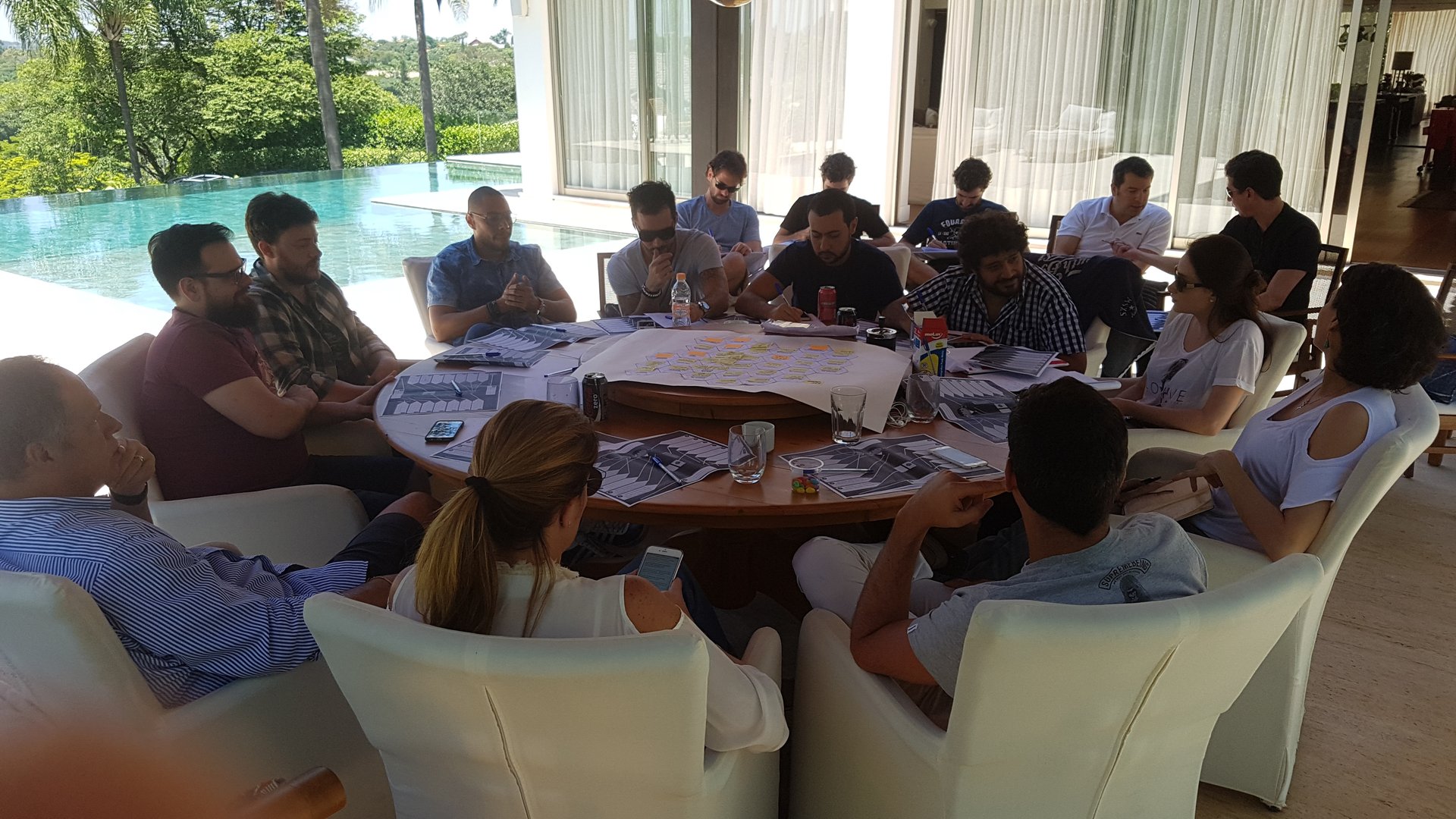
A storytelling workshop for executives is worth a senior calendar slot when it changes three things the following week: the case a leader builds, the way that leader takes a colleague's case apart, and the instruction a team gets when a draft comes back. Those three outcomes are what the room should be designed around.
Senior teams rarely need convincing that stories move people. They need a structure they can apply to the board deck, the investor update and the town hall already sitting in their calendars. Fernando Palacios founded Storytellers in 2006, the first storytelling company in Brazil, and 20 years of executive rooms keep returning the same lesson: the workshop that changes anything is the workshop that touches live work.
What an Executive Room Actually Needs
An executive audience arrives with two constraints that a general training program tends to ignore. Their time is expensive and their material is real. A senior leader who spends a day on invented case studies walks back to a deck that is exactly where it was that morning.
The second constraint is authority. Executives approve other people's work. A workshop that teaches them to admire good narrative while leaving them unable to specify it produces a leader who returns drafts marked weak and offers no direction for the rewrite.
That makes the design question narrow. What has to happen in one room so that senior people leave able to build a case, critique a case, and ask for a rebuild in language their teams can act on?
The Direct Answer
Run the session on live material, with the approver present, and end with three artifacts saved to the shared drive.
Live material means a deck, proposal or announcement already scheduled inside the coming weeks. The approver present means the person who signs off learns the same sequence as the person who drafts, which closes the gap where most rewrites die. Three artifacts means the room produces a rebuilt opening, a named objection map and a first-week plan, saved and dated before anyone stands up.
The rest of the agenda exists to serve those three outcomes. Anything that survives only as a handout gets cut.
How the Palacios Method Runs the Room
The Palacios Method runs on Narrative Intelligence and Strategic Entertainment, with the 8 Steps as its working engine. The 8 Steps hand a group a shared sequence, so an executive can point at a slide and name the step that went missing. Strategic Entertainment answers why a busy room stays engaged past the first data point, using tension and stakes drawn from the business itself.
In an executive session the sequence gets used twice. First as a build tool, on the material people brought with them. Then as a review tool, when each participant reads a colleague's rebuild and says where the argument loses its footing.
The second pass is where the skill transfers, because critique is the move an executive makes most often. A leader who can name the broken step saves a team a week of guessing. The full architecture sits in the method.
Running the Session: Five Steps
1. Collect the material a week early. Ask every participant for the real piece they want to fix. Reading them in advance sets the agenda, because the pattern across half a dozen decks is usually one shared structural habit.
2. Open with a rebuild. Take one volunteer deck and restructure its opening in front of the room. Visible surgery on real material buys more attention than an hour of principles.
3. Move the recommendation to the front. Each participant rewrites their own opening so the ask arrives before the evidence. This single move accounts for most of the improvement a senior audience will notice.
4. Name the objections out loud. Cost, risk and timing, usually. Each participant writes the sentences a skeptical peer will say, then writes the answer under each one. Those pairs become slides.
5. Close with a date. Everyone leaves with the rebuilt piece saved, the objection map attached and the meeting where it will be presented already in the calendar. Skill with no deadline decays quietly.
Frequently Asked Questions
How Long Should a Storytelling Workshop for Executives Be?
Two half-day sessions with live work in between beat one long day. The gap forces a rebuild under normal working conditions, which is the only condition that proves anything. Yamaha ran 24 training cohorts of the Palacios Method over 8 years, from 2016 to 2024, until the method became the company's official standard, for the same reason: fluency compounds through repetition.
Should Executives Train Separately From Their Teams?
Mixing them works better. Leaders learn what to ask for, contributors learn what to deliver, and the translation gap between the two closes in the same room. When the material in question is a board deck, the specifics live in storytelling for executive presentations.
Your Next Step
Pick the piece of work a senior leader is presenting next month and build the session around it. One room, the approver included, and one live artifact is enough to show what the method does. For a company-wide rollout, the cohort structure is laid out in corporate storytelling training.
To design a session for your leadership team, explore the services or get in touch with Fernando Palacios.
A calibrated method built from 20 years of real rooms, real audiences, and real results. The Palacios Method stack ensures the narrative lands. Not vibe typing. VibeStorytelling.
Next Step
Bring the Palacios Method to your team
The AI is not the author. The AI is the pen. Fernando Palacios is the author. Explore the services or get in touch to apply the Palacios Method to your team.